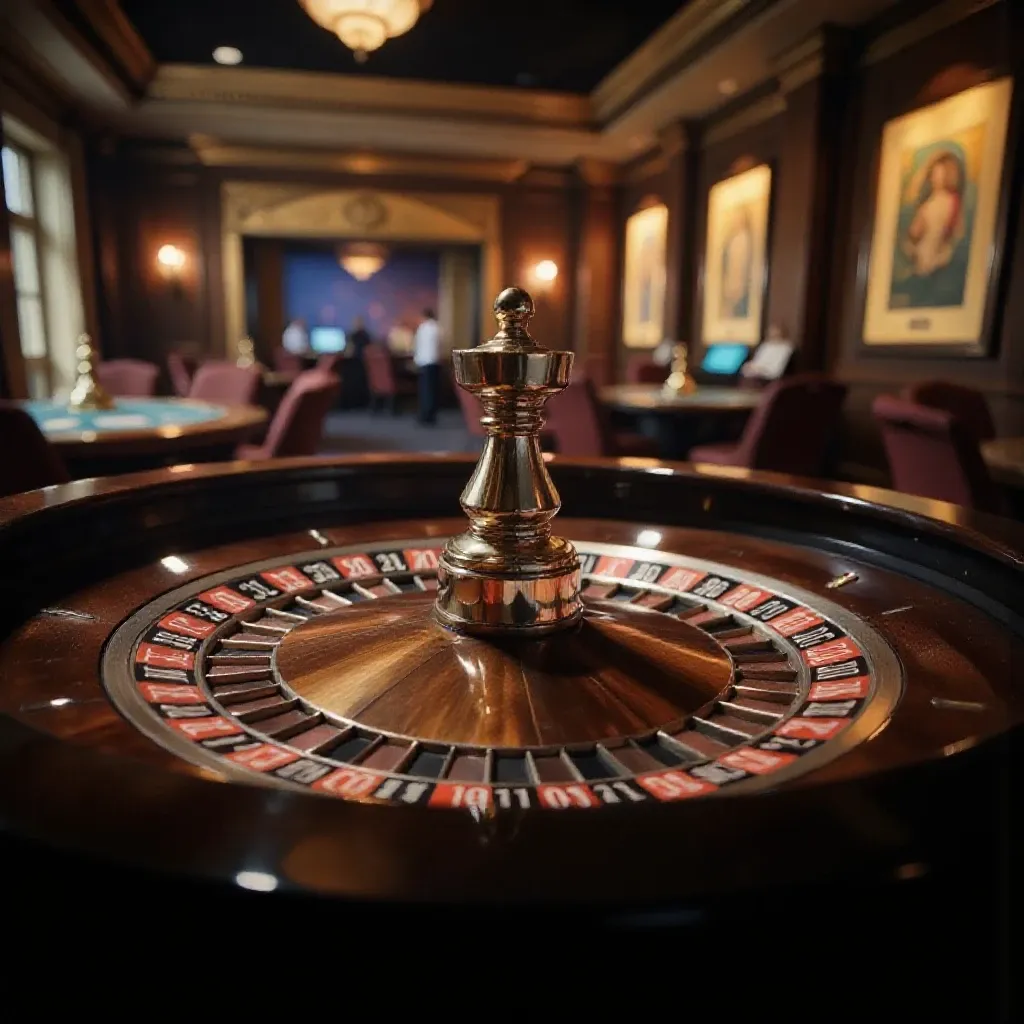
The roulette wheel, a mesmerizing dance of chance and anticipation, has captivated gamblers for centuries. The allure of predicting where that tiny ball will land, of outsmarting the system and walking away a winner, is a powerful draw. Many have chased the dream of cracking the roulette code, devising strategies and systems that promise consistent profits.
But can roulette truly be conquered? Is there a foolproof method to beat the odds and consistently win at this iconic casino game?
The truth, as any seasoned gambler or mathematician will tell you, is more nuanced than the enticing advertisements and whispered promises suggest. There is no sure fire way to win at roulette. While strategies can influence your gameplay and potentially manage your bankroll, the inherent randomness of the wheel makes consistent winning an elusive dream. Let’s explore the factors to consider.
Understanding Roulette Basics
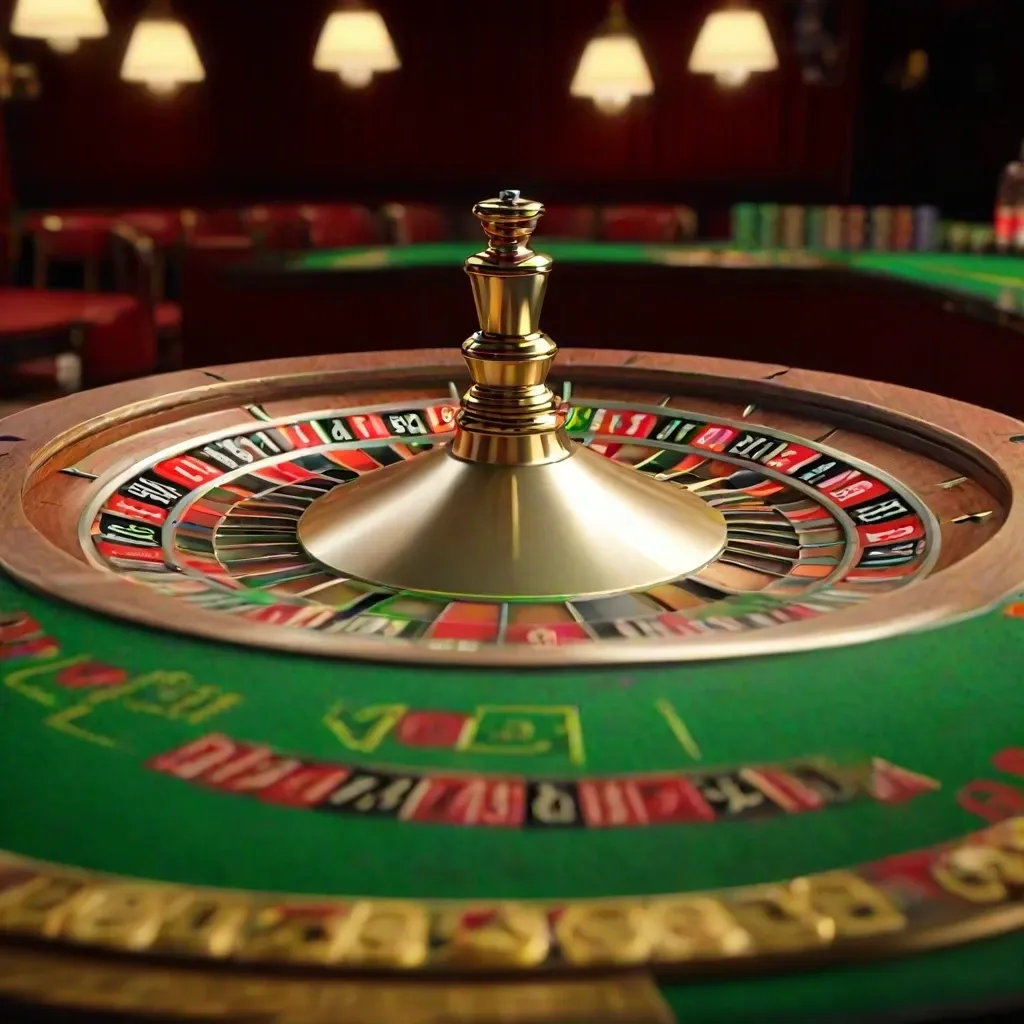
Roulette is a casino game of chance named after the French word for “little wheel.” The game involves a spinning roulette wheel with numbered compartments and a small ball. Players place bets on where they think the ball will land. To understand more complex strategies later, it’s important to be confident in the fundamentals of roulette, including the different types of wheels, available bets, and their payouts.
European vs. American Roulette
There are two main versions of roulette: European and American. The key difference lies in the roulette wheel itself. The European wheel has 37 slots, numbered 0 to 36. The American wheel has 38 slots: 0, 00, and 1 to 36. That seemingly small double zero (“00”) has a significant impact. It increases the house edge in American roulette, making the European version statistically more favorable for players in the long run because it has single zero. Knowing this nuance is crucial because it affects the probability.
Types of Bets and Their Payouts
Roulette bets fall into two main categories: inside bets and outside bets. Inside bets are placed on specific numbers or small groups of numbers. Examples include a “straight up” bet (betting on a single number), a “split” bet (betting on two adjacent numbers), a “street” bet (betting on three numbers in a row), a “corner” bet (betting on four numbers that form a square), and a “line” bet (betting on six numbers across two rows). Outside bets are placed on larger groups of numbers, such as “column” bets (betting on one of the three columns of numbers), “dozen” bets (betting on the first, second, or third group of 12 numbers), “even/odd” bets, “red/black” bets, or “high/low” bets. Each type of bet offers a different payout. While the payouts might seem generous, remember that they don’t directly reflect the true probability of winning. For example, while a straight-up bet pays 35 to 1, the actual odds of hitting that number on a European roulette wheel is 36 to 1, and even higher on an American Roulette wheel.
The House Edge: Why Roulette Favors the Casino
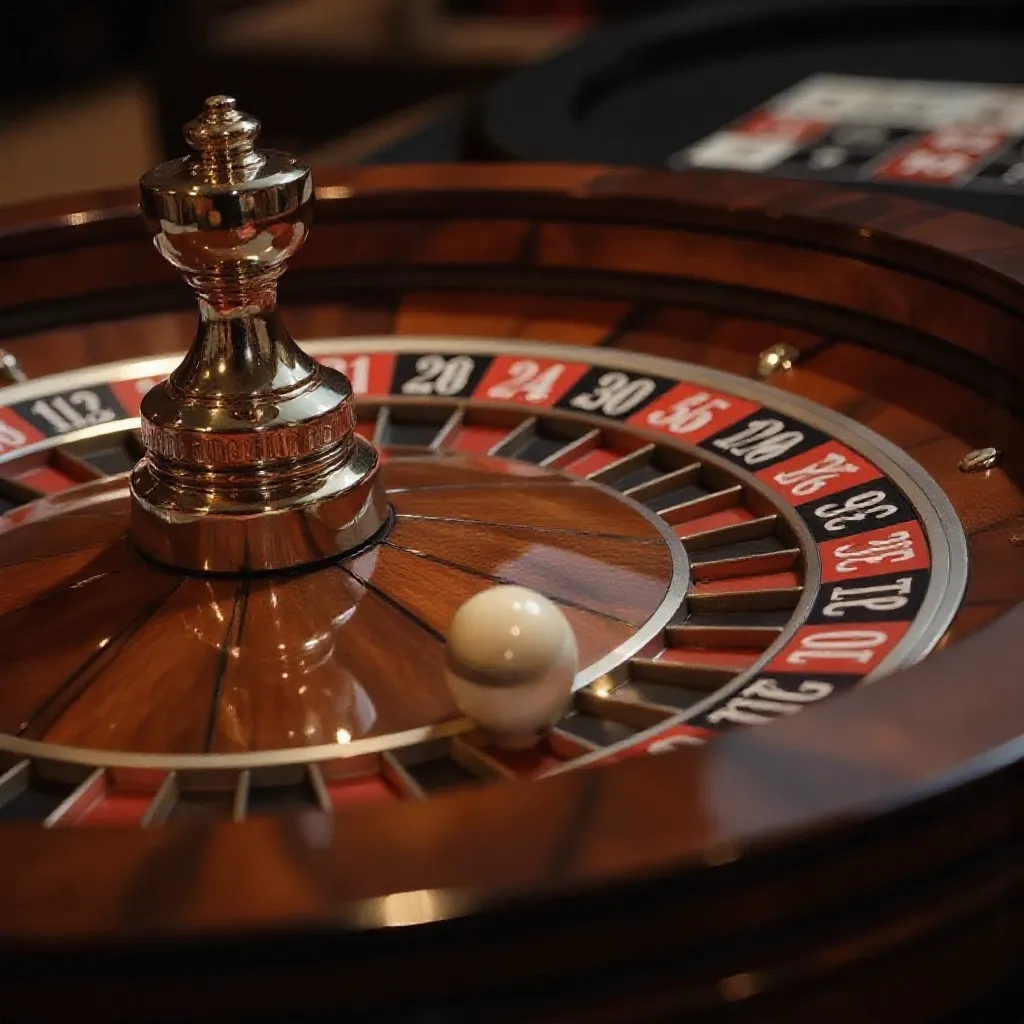
Roulette, with its spinning wheel and captivating allure, seems like a game of pure chance. While luck certainly plays a role in any individual spin, the reality is that roulette, like most casino games, is designed with a built-in mathematical advantage for the house, known as the house edge. This house edge represents the percentage of each bet that the casino expects to retain in the long run. It’s the reason why, over time, the casino will always come out ahead.
Understanding the house edge is crucial for anyone who wants to play roulette strategically. It helps players appreciate the true probability of winning and losing, and it underscores the importance of responsible gambling. The house edge exists on virtually every bet you can make on the roulette table. Whether you’re betting on a single number, a color, or a group of numbers, the odds are slightly tilted in favor of the casino.
Calculating the House Edge
The house edge isn’t some mysterious secret; it’s a straightforward calculation based on the probabilities of the game. The house edge is calculated by subtracting the expected return from 100%. The formula is: House Edge = 100% – Expected Return. A negative expectation means in the long run you will statistically lose money.
In European roulette, which has 37 slots (0-36), the house edge is approximately 2.7%. This is calculated as (1/37) 100%. In American roulette, the wheel has 38 slots (0-36, plus 00), which increases the house edge. The house edge is approximately 5.26%, calculate as (2/38) 100%. This difference in house edge makes a significant impact over time.
Popular Roulette Strategies: Do They Work?
Many roulette strategies promise to crack the code of the spinning wheel, offering tantalizing glimpses of consistent winnings. From simple betting patterns to intricate mathematical progressions, these systems aim to exploit perceived flaws in the game’s randomness. However, a closer examination reveals the truth: while some strategies may provide short-term gains, none can overcome the inherent house edge in the long run.
The Martingale System
The Martingale system is perhaps the most well-known roulette strategy. Its principle is deceptively simple: after each loss, you double your bet. The idea is that when you eventually win, you’ll recoup all previous losses plus a small profit. For example, if you start with a $1 bet and lose, you bet $2 next. If you lose again, your next bet is $4, then $8, and so on. While this strategy can lead to quick wins, it carries significant risk. Imagine a losing streak of just a few spins. Your bets can quickly escalate, potentially exceeding table limits or, more likely, depleting your entire bankroll. The risk of ruin is substantial, making the Martingale a dangerous proposition for all but the wealthiest players.
The Fibonacci Sequence
The Fibonacci sequence, a series of numbers where each number is the sum of the two preceding ones (1, 1, 2, 3, 5, 8, 13, 21, etc.), forms the basis of another popular roulette strategy. In this system, you increase your bet according to the sequence after a loss and decrease it after a win. While less aggressive than the Martingale, the Fibonacci system still relies on the assumption that you’ll eventually win enough to offset your losses. In reality, roulette has no memory. Each spin is independent, and past results have no influence on future outcomes. This means that the Fibonacci system, like the Martingale, cannot guarantee long-term profits.
Other Strategies (D’Alembert, etc.)
Numerous other roulette strategies exist, each with its own unique approach. The D’Alembert system, for instance, involves increasing your bet by one unit after a loss and decreasing it by one unit after a win. Then there’s the James Bond strategy, a more complex system that involves spreading bets across multiple numbers. Despite their varying methodologies, all these strategies share a common flaw: they attempt to impose order on a random game. There is zero empirical evidence suggesting these strategies consistently beat the game of Roulette. The house edge remains constant, ensuring that, over time, the casino will always come out ahead.
The Gambler’s Fallacy and Other Mental Traps
Roulette, a game built on chance, ironically becomes a playground for our minds to play tricks on us. Understanding these psychological biases is crucial to avoid making irrational decisions. The most well-known of these is the gambler’s fallacy, the false conviction that if a particular outcome has occurred more frequently than normal in the recent past, it is therefore less likely to occur in the near future (or vice versa). For example, after seeing a roulette wheel land on red five times consecutively, a player might believe that black is “due” and place their bet accordingly. In reality, each spin is independent; the wheel has no memory of past results.
The hot hand fallacy is another cognitive bias where people believe that a person who has experienced success with a random event has a greater chance of further success in additional attempts. Confirmation bias also creeps in, leading players to seek out and remember information that confirms their pre-existing beliefs about winning strategies, while ignoring evidence to the contrary.
Loss aversion, the tendency to feel the pain of a loss more strongly than the pleasure of an equivalent gain, significantly impacts roulette strategies. Players might chase losses, increasing their bets in an attempt to recoup what they’ve lost, often leading to even greater financial setbacks. Recognizing these cognitive biases is a crucial step towards responsible roulette play.
Responsible Gambling: Managing Expectations and Risks
Engaging in gambling should always be approached with caution and a clear understanding of the potential risks involved. Responsible gambling is not just about luck; it’s about making informed decisions and maintaining control over your gambling habits. By adopting a proactive and mindful approach, one can minimize the negative consequences and ensure that gambling remains a form of entertainment, not a source of stress or financial hardship.
One of the most crucial aspects of responsible gambling is effective budgeting. Before even considering placing a bet, determine a specific amount of money that you are comfortable losing. Treat this amount as entertainment expense, and once it’s gone, refrain from gambling any further. Avoid the temptation to chase losses, as this can quickly lead to a dangerous cycle of increasing bets and mounting debt. Setting strict time limits is equally important. It’s easy to lose track of time when caught up in the excitement of gambling, so setting a timer or using other reminders can help you stick to your predetermined limits.
Recognizing the signs of problem gambling is essential for both yourself and those around you. Some common indicators include gambling with increasing amounts of money, lying about gambling habits, feeling restless or irritable when trying to cut down on gambling, and neglecting responsibilities due to gambling. If you or someone you know is exhibiting these signs, it’s important to seek help. There are numerous resources available, including support groups, counseling services, and self-exclusion programs. Remember that seeking help is a sign of strength, not weakness, and it’s the first step towards regaining control of one’s life.
Expert Insights: Personal Experience
Over the years, navigating the world of people search has been a journey marked by both triumph and tribulation. There’s no magic formula, but understanding probabilities and employing smart strategies significantly boosts your chances of success. Let me share a couple of experiences that highlight this.
One instance that sticks out is when I was trying to reconnect with a childhood friend. Armed with just a name and a general location, the initial searches yielded dozens of results. The breakthrough came when I remembered a unique detail about their family – their unusual hobby. I factored that into my search criteria, and almost instantly, the right profile surfaced. That was a clear win, achieved by leveraging a specific, personal detail to narrow down the possibilities.
However, not every search ends in success. I recall trying to locate a former colleague using only his first name and the company he used to work for fifteen years ago. Despite exhausting every possible search combination and advanced filtering technique, the search drew blank. This case underscored a crucial reality: some searches, especially those relying on limited or outdated information, carry a low probability of success. The key takeaway here is to be realistic about your chances and avoid sinking excessive time and resources into searches with inherently low odds. Expert advice can guide you on when to persist and when to accept that, sometimes, people simply remain untraceable.
Conclusion
In conclusion, while the allure of a winning roulette strategy is strong, the reality is that consistently beating the game is exceptionally difficult. The house edge, inherent in the game’s design, ensures that over time, the casino holds the advantage. Numerous systems and approaches have been proposed, yet none can completely eliminate this built-in edge.
Therefore, the most sensible approach to roulette is to view it as a form of entertainment. Enjoy the thrill of the spin and the excitement of the game, but always play responsibly and within your means. Chasing losses or relying on roulette as a primary source of income is a risky proposition. Understanding the odds, being aware of the house edge, and practicing responsible gambling are the keys to enjoying roulette without risking significant financial harm. Ultimately, informed enjoyment is the true win.